This is not about control…

"College Newspaper Editor Forced to Resign After Mask Op-Ed" via Inside Higher Ed

The editor, being a person existing in the world and, presumably, a student who has attended class in previous instances, understood that there are various restrictions on what they can and can’t do with their own body in a classroom. The assumption can be made that the student has previously been amenable to their previous controls (such as wearing clothes, not wearing headphones, wearing shoes, not wearing a beer-straw-hat) without incident.

This is about masks.

Of Handmaidens and Cheerleaders

After Texas handed down their new draconian restrictions on abortion and the Supreme Court upheld the law (for now), the image above started making the rounds on social media. It’s funny and striking at the same time. A state that loves its symbols is having one of its most famous shrouded in a play on Margaret Atwood’s The Handmaiden’s Tale. Women without control over their body or their means of reproduction, their bodies hidden from all but those with high enough rank to have access. They have no agency, something the Texas law chips away at.

Yet, the problem with the meme is that Texas, America, the Western world isn’t like this. Shrouding the Dallas Cowboy Cheerleaders makes no statement because, even in the march toward Gilead, we would never allow that symbol of good, old-fashioned football and sex to be hidden behind a visual metaphor as clunky as this one.

See, we need women to be beautiful and visual, sexually available and on display. The Dallas Cowboy Cheerleaders represent a free spirit of healthy masculine fun, the red-blooded man’s fantasy. The new law changes none of that. The new law does not restrict men’s access to women, nor give women more agency over their bodies. The new law isn’t a step toward the type of totalitarianism in The Handmaiden’s Tale, for the female body will never be forced to be covered under true capitalism. To shroud the female form is to eliminate one of the most lucrative commodities the Western world has ever seen. Sex sells in the West, but only while you can see it.

The Dallas Cowboy Cheerleaders are athletes; probably underpaid performers; and one of the most enduring symbols of Texas. While the meme is worth of at least a smirk, the cynic in me understands that control over the female form already has a multitude of wardrobes, engineered for endless visual consumption.

My Demon Slayer movie review

What a crap title.

Inosuke was the reason I watched Demon Slayer in the first place. I’d come across a manga panel of him… being himself…and I thought, ‘I want to know more about that guy.’ I’ll probably go back and read the manga at some point, but I truly enjoyed the first season of the anime (even if it took a while to introduce Inosuke).

So I was truly excited to see Demon Slayer: The Movie – Mugen Train last night. Not only had I been aware of the great reception the film had and how well it was doing at the box office, it would be my triumphant return to the movies in over a year. The last film I saw, funnily enough, was My Hero Academia: Heroes Rising, which I thoroughly enjoyed. The theater was packed and everyone cheered at the end. Last night was a bit different, only about eight people in total. 

I don’t know if it was months of hype or the fact that my Starburst Minis were stale, but I didn’t get the chills I expected. We purposefully chose the subbed version (I’m a sub snob) because I really like Hino Satoshi, the voice actor of Rengoku. I love this character, I can’t explain completely why. Is it that his fiery sense of justice is played out in his hair? His ability to see the quality of a person while not remembering their name? His googly eyes? Who knows. But I couldn’t wait to watch Daichi kick some demon ass.

===Here There May Be Spoilers===

I am used to the expository dialogue of anime, especially fighting anime, but this time it felt excessive, especially coming from Enmu, the main(?) vilain through most of the film. I’m far from watching the season, so I went back and watched the final episode as a refresher before last night’s showing. I wondered how much of Enmu’s simpering vocal style I’d have to endure in the movie, and it was a lot more than I thought. For the his entire span on screen he was emoting and explaining to the point of distraction. Even at the end, his final moments of disintegration, we were subject to his internal monologue and I wondered why. I felt little to no satisfaction in his dying, only in Tanjiro and Inosuke’s success in killing him. Enmu was a non-entity for me, just something for the main characters to aim at. 

This is the lesson where your villains need to have some trait for the audience to connect to. 

Just as the last ashes of Enmu fade away, I was left wondering if that was all. Where was the big battle scene? When would the stakes be raised? Welp, let me introduce you to Akaza, an upper-tier demon that decided to show up about thirty seconds after his silhouette foreshadowed his presence and then boom. FIGHT! 

Akaza would have been more exciting had I not just finished season 1 of Jujitsu Kaisen who’s king of curses, Sukuna, Akaza felt like a pale imitation of. His showing up at the final turn of the film, calling out Rengoku felt tacked on. I left thinking the movie needed Rengoku to die and Enmu wasn’t powerful enough to do the job.

The animation and sound design were wonderful. My friend and I agreed that the whole dream plot line was the most interesting part, particularly Tanjiro’s method of breaking out of his dream (and how it almost backfired.) There was just enough Zenitsu and almost enough Inosuke. And those scenes with Tanjiro’s family, I felt like Sukuna had ripped out my heart, not Itadori’s. (Mixing my anime again, sorry). Ugh.

Overall, though, I left feeling a bit flat. I still love the story and the characters, but I didn’t cry for Rengoku like the characters did. To be fair, I didn’t spend enough time with him, and to be honest, neither did they. The sadness felt forced and Rengoku deserved better.

I wanted to love Scrivener

This morning I had the second of two software meltdowns. Meltdown is harsh, but they happened in my allotted writing time, so I guess the meltdowns were had by me. Twice, when opening Scrivener, I received a notice for an update. Without me selecting an option, the application closed and deleted its own .exe file. Yesterday I reinstalled the previous version and was able to work. This morning I had to uninstall and reinstall, twice, the new version. That was it for me.

Scrivener is something I use mostly for my fiction writing and I think it’s a wonderful program…if you have a Mac. I think historically more attention has been paid to the Mac version over Windows. It took a long time to pull a Windows version out of beta and I was excited to work with version 3 when it came out, even paying to update my license (I’ve had Scrivener for a long time). But the problems the last two mornings reminded me of the worry I’d been carrying in the back of my mind. The Windows version just doesn’t feel like a priority, or, more precisely, it’s feels like an afterthought.

When I finally got the latest version to load (and stay loaded) I set to work exporting everything out. I could have scoured the .scriv folders for the text if necessary, but I was already frustrated. Boom. Everything into Google Docs, where I can work on it in relative safety from my PC and my Chromebook and my phone.

It’s probably no lie that I wanted to make this shift anyway, but needed the right push. It was also a good way to procrastinate doing anything else productive.

At once time I considered adding my comp exam notes into a Scrivener file, but opted for a wiki instead. The ease at which I can make connections and interwiki links works well with the thought flow I need for that type of work. Also, this is a good reminder that I’ve got to get back to that work soon.

I would still recommend Scrivener to my Mac friends. It’s can be very powerful if used to its fullest. However, I would suggest to my PC friends to find or build a system out of what already works for you. If possible, something that allows you to never worry about what type of computer you can afford.

In which I coin the term panicfic

This post is brainstorming, not research. Clearly.

I’m fascinated by these little stories we create in the middle of a moral panic. I was going to coin the term panic-dote but it’s used for something else according to the Urban Dictionary (though, in an extenuating circumstances there is a way this established definition could fit).

Perhaps panicfic is a better phrase.

I grew up in the 70s and 80s, so a lot of the panicfics I’m aware of are racist, homophobic, and misogynistic, but others I’ve heard recently seem to fit the bill and are a little softer, though that is relative to the teller and listener.

They’re not urban legends. They’re smaller than that. They’re shorter than that. These stories are these clipped, little anecdotes that allow people to express their outrage. They’re often a way of putting yourself within a group, testing people to make sure they think the same way you do. There’s never really a basis in fact. It’s always something that you heard from your cousin’s neighbor’s dog‘s husband‘s best roommate.

One of my favorites from recent times is the “My friend said Merry Christmas to a woman, and she yelled at him, saying ‘I’m an atheist and that offends me’ and she was very upset,” and of course the story isn’t true. If it’s close to true, the lady was fucking with you and your satire gland is shriveled and useless. Atheists can love Christmas, too. We love cookies. We love materialism. Just like Jesus!

Building upon an idea I threw out there in my last post, these panicfics are fanfiction, a genre of wish fulfillment where people tell comforting stories to themselves. Some of these are offshoots of overplayed media outrage, but most start as juvenile play. I often think about my own school days, centuries before Livejournal, tumblr, and AO3, where my friends and I had to pass notes back and forth, always describing a “dream” we had involving some band, or athletes. It was never a dream, friends, it was fanfic and it was great.

But this is darker, this is destructive and viral and dehumanizing. Panicfics always show more about the person telling the story (let’s face it, the person making up the story) than the story itself. As as for the people they are trying to target, they say nothing. No one creating these stories has ever interacted with the people they hate.

It’s really difficult to extract panicfics from urban legends as they have a similar vector of spread, especially now in the Internet age, but it is their reinforcement of insecurities that make them so powerful. The two that come to mind for me are awful. In an early draft of this essay I wrote them out in full, but that’s what the panicfics want, they want to spread.

I’ll be vague: [edit]on second thought, I’ll be vaguer: [edit 2]fuck it: one was misogynistic and homophobic, the other racist and classist. You figure out which I mean.

If you’re my age, you probably have heard them both. If you’re younger and have an inkling, I am very sorry. We have failed you.

If you’re younger and haven’t heard them, but have a cesspool of hate and misinformation coming at you every day when you’re just trying to post your dance videos – WOW we have all failed you and your strength is an inspiration. Please save us.

If I searched through news databases or Google to trace some origin to these panicfics, I’m sure I will find the story somewhere. I’m sure I will find them presented as funny or amusing or, in some cases, presented as “this actually happened.”

It didn’t happen. It’s made up. It’s a fiction. It’s a desire to show the listener that the teller has “heard a thing or two” and “knows the way of the world.” It’s the gossip of the idiot, too scared to crawl out of their own backyard and talk to a person that doesn’t look like them. Even if, digging deep, down into the bowels of public discourse, there appears to be a shred of an inkling of a microscopic point that seems parallel to one element of these panicfics, they’re still not true. They only truth they hold is in their power to inflict pain and death.

I started out fascinated by panicfics to the point I made a name for them. Now I’m just mad.

That guy that told me the Atheist-Christmas story? I was so shocked at the blatant bullshittiness of the thing, I didn’t know what to say. I said “sorry? People are weird.” I wish I’d had a better comeback, but stupid stuns.

A Medical Story

I had a conversation with the clerk at my pharmacy the other day. I was picking up a prescription for a family member and he said “You know it costs $XXX?”

“Yes, and I still don’t know why you ask me. It’s not like we don’t need the script.”

“Well, we let people know because when they hear the price, sometimes they don’t want it.”

I paused. “No. It’s not that they don’t want it, they can’t afford it. There’s a difference.”

“Yeah, I guess you’re right.”

“Words matter. They change how you think.”

This is as close to quoting as I can remember and nothing like the political fan-fic you usually read online about “let me tell you what happened when I told this person a thing-or-two.” It wasn’t a confrontational conversation and it happened pretty sporadically and I didn’t feel particularly proud afterwards. We so often think of storytelling as reading to children, instead of how the choice of words we use to describe our experience then inscribes that experience onto our conscious. I left frustrated.


There are a lot of nuances to the Humana-Medicare fraud story that came across the news-feeds a few days ago. I saved it with the intention on writing about the piece, not because I am someone who regularly comments on the health insurance industry, but because it is complementary to some of my research and what I think about all the time. This story and its $200 million dollar headline is not how we’ve been trained to think about insurance fraud, and that’s the point.

We have seen those local news investigations of the person on disability payments for back issues, somehow able to build a deck in the behind their house, or the person who, in conjunction with their doctor, fudges the severity of their symptoms to get more coverage for medical supplies that they would not normally be entitled to. These are the stories about fraud that we’re used to: the individual scammers, the advantage-takers, but where does the overpayment to Humana enter into this narrative. For the wider audience, it doesn’t.

Humana has a huge presence on daytime cable television, along with other Medicare supplemental programs promising to put more money in your social security check every month by switching to their insurance. None of these commercials (easily) disclose that you’re forgoing part of Medicare (hence the refund) only to pay that money to the separate insurance company. It’s a boon for the corporations and seems like a no-brainer to the hapless person wanting an extra $100 in their Medicare check every month.
Yet, still, that is a story told about individuals, the lonely seniors unable to see through the smoke and mirrors of television advertisements. The “boomer” generation taught to trust the evening news and the sales pitches in the commercial breaks never unlearned that trust. Even after Watergate, they turned to television to get the information they needed. The channel hardly mattered, and, when it comes to insurance advertising, still doesn’t. There are a lot of generational generalizations in those previous sentences, but there are sparks of truth within. We still think of Medicare (or any health insurance) fraud as an individual problem. We tell the stories of individual people scamming the system, which allows us to shake our heads and feel better about how we aren’t the scammers and maybe the system is the problem.

I don’t believe in universal truths (aside from the lack of universal truths) but something I find to be a consistent occurrence is that any system created by humans can be exploited by humans. The Humana-Medicare story suggests that the largest exploiters of the system are at the corporate level. Yet we never tell the story like that. We always focus on the man building the deck, or the woman with too many diabetic supplies. We focus our attention and our scorn on targets that are the same size as us: individuals that can be outed and shamed. We understand the individual scam because we perpetuate them ourselves in any number of ways: we drive a little fast, we needle our way out of jury duty, we find advantages to pay less in tax, etc. Perhaps we get upset not at the scam, but at the scammer being caught. It tightens the rein on all of us.

Or at least that’s the impression. The watchdogs will start scrutinizing individual actions more closely, because that’s where the story takes us, if not the data. The story is the reality and if multiple people committing $100 a month in Medicare fraud is the scourge presented, then where does the $200 million assessment against Humana fit into that story. Honestly, it doesn’t. We won’t cancel our individual Humana plans because by purchasing them in the first place, we’ve agreed ith the idea that the corporation is a better adjudicator of our health care than government-funded Medicare. We have already sided with the individual over the communal in our story – the individual as the mighty sovereign of liberty and the individual as the mighty sinner in violation of justice and fair play.

Justice, sovereignty, fair play, are all stories. We tell ourselves these stories day in and day out in order to feed and reinforce the world view of our communities. And that community is a story of people telling the same stories in the same way. Humana is a corporation that told a number of small stories in distorted ways that entitled them to receive more money than they were owed. The federal audit is telling that same story from a different point of view.


NPR only uses the word “fraud” in two places: one, while describing what extrapolation is to the readers, and two, in one of the story tags: “medicare fraud.”

Some thoughts on grad school

None of my opinions about grad school make me popular in any discourse.

Ugh. I miss smoking.

I don’t have any profound words about grad school, really. I’m ending my third year of the PhD after two years of the M.A. and there are moments when I have trouble finding the energy to keep moving forward. I’m at that stage now where I need to get back into my routine, but the will is not there. I’ve been looking outside of myself for inspiration and motivation but–and I know this and, if you asked me I’d tell you this–that’s not where those things come from. Being off campus is a drag. Being on campus can be a drag too.

yeah, this is where I check my privilege. I get it.

I have to remind myself what I’m doing this for and that answer is fuzzy right now. I enjoy working with students and their writing, that hasn’t changed, but I think this semester is just a culmination in constant fatigue. Am I supposed to be dedicating all my time to trying to make classes engaging? All of my time? At $20K a year?

The lack of contact with my colleagues convinces me that I am the one failing. That’s a lie, but I wouldn’t say I’m thriving.

It’s difficult to reach out when everyone is going through similar pressures and anxieties. Those that always say “we can talk any time” are overburdened, as far as I’m concerned. And, to be honest, I don’t want another goddamned Zoom meeting in my life. I’m tired and discouraged, and I think that’s reaching my students.

Is that a bad thing though?

Is it bad for them to understand that the unending timeclock, inseparable spheres of life, constant ennui are not unique to their experience? Is it good for them to understand that we’re all kind of hating all this shit together?

I don’t know. I guess my end of semester evaluations will tell me. That’s fine.

Perhaps the problem is I am just completely uninterested in the course topic this semester. Perhaps I am just completely uninterested in moving forward with the program. I have no answer, yet. Just the semi-annual re-interrogation about why I do this?

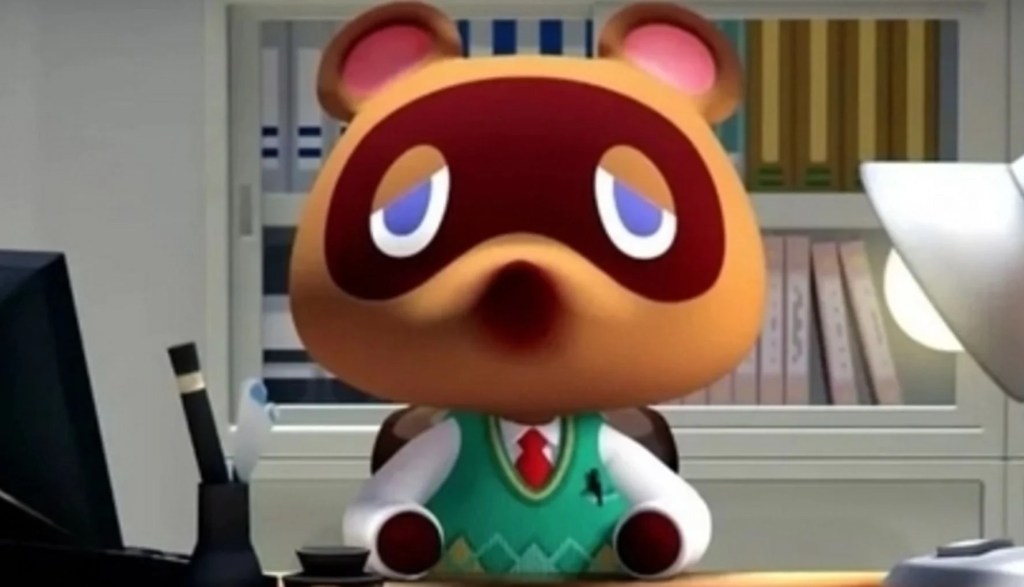
Tom Nook is not a crook. He’s an entrepreneur.

I was thinking about the regret I felt after buying Animal Crossing and not enjoying it. Perhaps because I never played any of the previous console versions of the game, only the mobile version, I had a misunderstanding of what I was getting into. What I found, what I got into was a whole lot of nothing. It was cute, but boring. Utterly, terribly dull.

Perhaps it was the real-time clock, the one that mimicked the endless March that we still find ourselves in, pumpkin spice not withstanding. The short times I played the days seemed interminable and I wondered if part of the draw was just checking in on a daily basis and seeing how much oranges were going for that day. After a few days it felt like one more thing on my to-do list, one more thing I don’t get credit for.

Next, the crass capitalism of the thing confused me. Was it supposed to be ironic, satire, educational, dystopian? When I finally paid off my initial loan to inhabit the little island, I felt no relief, no satisfaction. The debt never weighed over my head, but perhaps by that time I’d realized I was never going to love this game. The magic, if it had ever been there, was gone.

I always forget Rule 34 when I do image searches. Never forget Rule 34.

What I did feel was jealousy when my two island mates got better starting houses than I. Why was mine so narrow? Why wasn’t that yellow roof brighter? I got frustrated trying to manage my inventory when I needed to collect “all the things” in order to get paid. I wasn’t buying accessories, or building furniture, or tricking out my too-narrow house — a problem Ian Bogost’s son appeared to have earlier this year — I was just trying to get a long and finding myself leaving the game earlier and earlier each time.

I didn’t like those feelings and I didn’t like the me that had them. I didn’t like how managing stuff soon took over my gameplay. I didn’t like how I was encouraged to check into the store for points. It felt too much like real life and real like was what I wanted to escape. I wondered when they were going to start offering Starbucks stars for shells. There’s a tie-in waiting to happen. The game quickly became drudgery.

It’s been at least a week since I’ve played and it’s only crossed my mind because I left a note to myself to write a post about Animal Crossing and capitalism, but Ian’s article is better. There’s no sense doing duplicate work, not when there are oranges to pick, trees to shake, and the grind of perpetual debt.

Note to self: Stop hoarding and start reading

I’m awesome at collecting Tweets and articles from Feedly and various tidbits of interest from all over the Internet and social media. I’m a practiced hoarder.

The very first step of David Allen’s “Getting Things Done” is Capture, grabbing items that are pertinent to you, whether they’re emails, articles, new ideas. The purpose of Capture is the curate the deluge of information coming your way at any given time and separate it into doable “boxes.”

Next you make a decision on its “actionability.” Is it doable now? Is it urgent? You’re sorting through your digital inbox determining the temporal worth of everything you’ve captured.

Finally, there’s organize, where you place all the items into their appropriate spots. You’ve probably heard the rule “if you can do a thing in two minutes, just do it.” That’s the best rule from the whole system, I think. In fact, I just crossed something off my long-term to-do list this morning because it only took a few minutes. Great advice. Good job me! Or you can delegate work to someone else, which for me, doesn’t work, because I’m it. Solomente. Hitoride. Alone.

Here’s where monkey hits the wrench for me. I’m great at capturing items. Whether I use apps like Raindrop or Pocket or Instapaper or Google Keep (and I’ve used them all), I’m awesome at collecting Tweets and articles from Feedly and various tidbits of interest from all over the Internet and social media. I’m a practiced hoarder.

I tend to skip the Clarify part, skipping straight to organization and dutifully, once a week or so, adding tags and moving into folders, in general (as I list it on my to-do list) processing the information I’ve collected over the course of the week. I can organize like no one’s business.

Which is the appropriate idiom because all those articles and ideas that get organized, stay unread, unused, underappreciated, underground for all that it matters to my research, writing, of life in general. With each realization of failure to consume the information I want and with a steadily increasing pile of digital texst waiting for me to read, I would empty the particular app I was using of its collection, blame the app’s shortcomings for my own, and then switch to an entirely new system that will surely work with my style and this is just the thing I needed.

Two months later…

The Philly Trash Strike of 1986 – that’s the Vet in the background.

So as with all things, when you realize the issue isn’t the software, or the marriage, or the job, or the presidency – but YOU. You are the thing that makes it all broken and bad, then its time to fess up and change the one thing you can change. You.

Or me, in this case. You are perfect. I’m in progress.

I stopped collecting. For the last month, I’ve stopped collecting and curating like I used to. I have some bookmarks on Twitter, but only a few and I know they’re all teaching related. Occasionally I add something to my GQueues To-Do list, but only with a date and time so I can take care of it quickly.

Now, when I see an article that I think would benefit me, my research, or my students, I just read it. Honestly, that’s it. I just stop and read the article.

I mean, it doesn’t take that long. I’ve read this investigative work by the Orlando Sentinel called “Laborland” about the plight of theme park workers. That was on the tail end of reading the Washington Post article about families living in motels in Kissimmee. I’d seen a tweet from a reporter at the Sentinel that highlighted their own work in light of the Post’s reporting. Both were worth my time, and yours.

Recently, I read this piece from Edgar Gomez on Narratively about the subculture of “Gays with Guns” in the aftermath of Pulse and the rise of homophobic and trans violence. It’s a terrific piece of experiential reporting and left me with mixed feelings about how we feel and deal with threats differently.

A friend linked to an article via social media, so I took the time to read “This Isn’t What We Meant By Hybrid Learning” at We Are Teachers and instead of just getting mad at the headline, I was able to have my anger be more informed, nuanced. An unending ember instead of a quick flame.

And I think that’s the ultimate result from forgoing collection: I’ve slowed down. Taken the time to read more fully when it comes to current issues. I’m a bit less inclined to “react and move on.” Even in Twitter, even with this tweet, I read the thread first before commenting:

Ultimately, wide-forehead aside, I feel less cluttered mentally, less inclined to switch on and off, and more receptive to diving into articles in the same way I would research. I think giving up Collecting will ultimately improve my comprehension and retention when I’m close reading and give me the clarity to assign urgency to what matters, not just what’s loudest.

Is it okay to blog about me on my blog in this economy?

What would you call a flock of caveats? An “apology”? A “press release”? A “special message to my fans”?

I didn’t sleep well last night and that’s part of this. There was no end to the tossing and turning and limb pain and just general shifting about that I think I managed about an hour of sleep total. But this isn’t about that, thought that may be the start.

I pulled into the grocery store parking lot with tears in my eyes. It’s a short drive from my home, about a mile, and in that time I took the dismissal from my mother about my sleep issue and transformed it into a meditation on my general sense of malaise. Where had the motivation gone? By the time a slid into a spot near the carriage return, I understood and I was ready to cry.

There are two types of people in the world: those who separate the world into two types of people and those that don’t. Normally I don’t, but in that long street strewn with Trump signs and autumn flags, I changed my mind and decided to binary the crap out of this. This isn’t about Trump, though he’s part of it.

There are two types of people in the world: those that express their feelings and those that reserve their feelings. At the very least, we tend to skew one way or another, and I fall into the reserve category. This causes two problems for me: I don’t get the help I need easily and, well, the “express-os” tend to take all the air in the room, and the energy from me. No, I’m not sub-tweeting you, though that’s part of it.

I composed myself, as I do, and did the groceries, (obligatory “like the good capitalist I am” statement that recognizes I willfully take part in a disempowering scheme in order to have turkey and coffee creamer – only humanities majors are required to write this caveat). I came home. I went upstairs to my office. I did no work.

In doing no work, I had to find something to distract my brain, so I found an audiobook to listen to, giving me the illusion of production (“there’s that creeping capitalism again” disclaimer) while meh-ing myself down to meh-town. I’d first picked a book on narrative, but this isn’t about that book, though that’s part of it.

The book I settled on is Write No Matter What by Joli Jensen, all about dispelling the myths of academic writing and developing a healthy habit of scholarship. It’s great and I ended up buying a hard copy too because I found it helpful, though it didn’t actually get me to work on my writing. I did stop partway through to post the upcoming week’s work for my composition class. This isn’t about teaching, though you know the pattern by now.

What brought me to tears, to reserves, to meh, to here is the fact that I’m totally fucking lost when it comes to my PhD program. Pandemic aside, though that’s part of it, I feel like I need some hand-holding right now. Yet I also feel like the department is just waiting for me to finally flake out and quit. That’s unfair to the department, but not to my feelings, which I generally keep to myself. The colleagues I normally talk to about this are gone. I didn’t get to say good-bye. That’s not fair. That’s why I was crying this morning. I’m gonna cry again.

Hold up…

I am reserved and twice the age of my colleagues and there may be an assumption I know what I’m doing and part of that comes from me. I have no clue. I don’t know how to even start a discussion about my comprehensive exams. I don’t know how my language test will work now nor how I’ll pass. I don’t know what I should focus on. I don’t even feel like I have anyone to talk to about it and even if I did, I don’t know what questions to ask.

Hold up again…sorry…

When you don’t know what to do, all the problems seem huge. I know how it feels to help minimize something into workable chunks for someone else, someone who is overwhelmed and anxious. I just have a terrible time trying to do the same for me. And that pandemic, the one that’s part of this, doesn’t help me prioritize my needs, particularly when I’ve spent a lifetime being told to minimize them. This is edging into territory that I don’t want to get into right now, though that’s part of it.

I suppose I could end on an optimistic note, something you can take away with you. A life-lesson learned. A bit of advice. A quick little pep talk that says “it’s okay to fight for you, ya know.” Then we can part ways and you don’t have to worry about me because in the end I realized my problem wasn’t that big at all, really, it’s loaded with privilege, right? I mean, there are larger problems in the world I probably haven’t read the scholarship on and “fuck off with your bullshit, Karen.”

OK. You’re right. It’s fine. I’m fine.

I almost ended this there, after “I’m fine,” like some postmodern bullshit essay that wants to leave you questioning the purpose of the whole piece or some amateurish attempt to make you self-reflective about judgement and priorities and now I’m mad I’ve used bullshit (italicize that crap) twice so close together but I’m not changing it.

The fuck am I doing? I am thinking about (worrying about) the audience for this piece, knowing that I’ll put it up on Facebook (with another caveat) to be read, but generally it not being read, or if read, not reacted to, and I’m not lamenting though I am using the language of lament. I am not fishing, I am just frustrated.

I don’t know how to ask for help.

I can feel my fingernails hit the keys on my keyboard so I’m writing this in a sustained sense of the heebie jeebies. But this isn’t about that.

Though…