Hi, my name is Heather and I’m a…

Defining my subject position seems…infinite. I can easily say female and white – the two broadest categories; add in cisgender and heterosexual – for the less interesting bits. Class? Well…when? I’ve gone from lower-middle to upper-middle to middle-as-you-can-get-middle and back again. All of those levels have their own nooks and crannies, if you will, and each has constructed my subject position at each time. I am more interested in where this positional classification actually ends (probably at the quantum level, but there position is only in potential).

I am also an atheist, overweight, a smoker, peanut-hater (non-allergic), lover of 1970s R&B, Moon-landing defender, possible Highlander, cat owner, book reader, and confessor that at this point in the list it becomes increasingly less humorous and more like a terrible eHarmony profile. Does having access to a public park as a child affect my subject position? The age I lost my virginity? Does being a non-traditional (middle-aged) student make my academic positions more or less conservative? Is turning the dehumanizing act of categorization back upon ourselves instead of toward others an essential part of postcolonial studies?

Yes.

By assessing “what am I” instead of declaring “what are you” we include ourselves in the broader scope of humanity, instead of sitting above it, looking upon a people as specimens swimming in microscope slides. We remove the unspoken superiority when placing people into checkbox-shaped compartments. We stop being an “us” and realize we are all “them.” Yet, this realization is not an end game. I do not wake up the next day all of a sudden…woke. It is the start of a process; the absorption of the stories that paint a fuller picture of the world and the deconstruction of the stories that have shaped it thus far. The Western stories written in and about the colonized world shape(d) the lives of people newly independent and those struggling under a colonial legacy. Yet, it is important not to stop at that new lens on the old cannon, satisfying as it may seem. Keeping focus on Western stories, even within the postcolonial view still only tells part of the whole story. Opening up the colonized narratives expands the story from the “flat” experience that Adichie speaks about in her video.

Others than Kipling wrote of India.

And here is where, even in week one, postcolonial studies intersects with my own research. Columbus’ letter is a brilliant example of the earnestness of the colonizer in his (and I use his most emphatically here) infantilization of the colonized. They are “of simple manners and trustworthy” like children, eager for the paternal affection of a far away crown (Desai and Nair 20). And it’s through stories–travelogues, treaties, psalms–that this infantilization is reflected back on the colonized and internalized. Adichie’s words, when confronting the Western stories she read as a child, cannot be understated: “how impressionable and vulnerable we are in the face of a story, particularly as children.” The stories we tell about ourselves are in constant discourse with the stories told about us, and therefore, I think, postcolonial studies is about giving voice and validity to the fuller volume of stories that shape people’s lives.

Preface to The Scientific Romances of H.G. Wells

I was transcribing this for my notes, and I was trying to pick out a quote to share, and I couldn’t settle on just one. So, here it is, in its entirety.


“Mr. Gollancz has asked me to write a preface to this collection of my fantastic stories. They are put in chronological order, but let me say here right at the beginning of the book, that for anyone who does not as yet know anything of my work it will probably be more agreeable to begin with The Invisible Man or The War of the Worlds. The Time Machine is a little bit stiff about the fourth dimension and The Island of Dr. Moreau rather painful.

“These tales have been compared with the works of Jules Verne, and there was a disposition on the part of literary journalists at one time to call me the English Jules Verne. As a matter of fact there is no literary resemblance whatever between the anticipatory invention of the great Frenchman and these fantasies. His work dealt almost always with actual possibilities of invention and discovery, and he made some remarkable forecasts. The interest he invoked was a practical one; he wrote and believed and told that this or that thing could be done, which was not at that time done. He helped his reader to imagine it done and to realise what fun, excitement or mischief would ensue. Many of his inventions have “come true.” But these stories of mine collected here do not pretend to deal with possible things; they are exercises of the imagination in a quite different field. They belong to a class of writing which includes the Golden Ass of Apileius, the True Histories of Lucian, Peter Schlemil and the story of Frankenstein. It includes too some admirable inventions by Mr. David Garnett, Lady into Fox for instance. They are all fantasies; they do not aim to project a serious possibility; they aim indeed only at the same amount of conviction as one gets in a good gripping dream. They have to hold the reader to the end by art and illusion and not by proof and argument, and the moment he closes the cover and reflects he wakes up to their possibility.

“In all this type of story the living interest lies in their non-fantastic elements and not in the invention itself. They are appeals for human sympathy quite as much as any “sympathetic” novel, and the fantastic element, the strange property or the strange world, is used only to throw up and intensify our natural reactions of wonder, fear or perplexity. The invention is nothing in itself and when this kind of thing is attempted by clumsy writers who do not understand this elementary principle nothing could be conceived more silly and extravagant. Anyone can invent human [vii] beings inside out or worlds like dumb-bells or a gravitation that repels. The thing that makes such imaginations interesting is their translation into commonplace terms and a rigid exclusion of other marvels from the story. Then it becomes human. “How would you feel and what might not happen to you,” is the typical question, if for instance pigs could fly and one came rocketing over a hedge at you? How would you feel and what might not happen to you if suddenly you were changed into an ass and couldn’t tell anyone about it? Or if you became invisible” But no one would think twice about the answer if hedges and houses also began to fly, or if people changed into lions, tigers, cats and dogs left and right, or if everyone could vanish anyhow. Nothing remains interesting where anything may happen.

“For the writer of fantastic stories to help the reader to play the game properly, he must help him in every possible unobtrusive way to domesticate the impossible hypothesis. He must trick him into an unwary concession to some plausible assumption and get on with his story while the illusion holds. And that is where there was a certain slight novelty in my stories when first they appeared. Hitherto, except in exploration fantasies, the fantastic element was brought in by magic. Frankenstein even, used some jiggery-pokery magic to animate his artificial monster. There was trouble about the thing’s soul. But by the end of last century it had become difficult to squeeze even a monetary belief out of magic any longer. It occurred to me that instead of the usual interview with the devil or a magician, and ingenious use of scientific patter might with advantage be substituted. That was no great discovery. I simply brought the fetish stuff up to date, and made i as near actual theory as possible.

“As soon as the magic trick has been done the whole business of the fantasy writer is to keep everything else human and real. Touches of prosaic detail are imperative and a rigorous adherence to the hypothesis. Any extra fantasy outside the cardinal assumption immediately gives a touch of irresponsible silliness to the invention. So soon as the hypothesis is launched the whole interest becomes the interest of looking at human feelings and human ways, from the new angle that has been acquired. One can keep the story within the bounds of a few individual experiences as Chamisso does in Peter Schlemil, or one can expand it to a broad criticism of human institutions and limitations as in Gulliver’s Travels. My early, profound and lifelong admiration for Swift, appears again [viii] and again in this collection, and it is particularly evident in a predisposition to make the stories reflect upon contemporary political and social discussions. It is an incurable habit with literary critics to lament some lost artistry and innocence in my early work and to accuse me of having become polemical in my later years. That habit is of such old standing that the late Mr. Zangwill in a review in 1895 complained that my first book, The Time Machine, concerned itself with “our present discontent.” The Time Machine is indeed quite as philosophical and polemical and critical of life and so forth, as Men like Gods written twenty-eight years later. No more and no less. I have never been able to get away from life in the mass and life in general as distinguished from life in the individual experience, in any book I have ever written. I differ from contemporary criticism in finding them inseparable.

“For some years I produced one or more of these “scientific fantasies,” as they were called, every year. In my student days we were much exercised by talk about a possible fourth dimension of space; the fairly obvious idea that events could be presented in a rigid four dimensional space time framework had occurred to me, and this is used as the magic trick for a glimpse of the future that ran counter to the placid assumption of that time that Evolution was a pro-human force making things better and better for mankind. The Island of Dr. Moreau is an exercise in youthful blasphemy. Now and then, though I rarely admit it, the universe projects itself towards me in a hideous grimace. It grimaced that time, and I did my best to express my vision of the aimless torture in creation. The War of the Worlds like The Time Machine was another assault on human self-satisfaction.

“All these three books are consciously grim, under the influence of Swift’s tradition. But I am neither a pessimist nor an optimist at bottom. This is an entirely indifferent world in which wilful [sic] wisdom seems to have a perfectly fair chance. It is after all rather cheap to get force of presentation by loading the scales on the sinister side. Horror stories are easier to write than gay and exalting stories. In The First Men in the Moon I tried an improvement on Jules Verne’s shot, in order to look at mankind from a distance and burlesque the effects of specialisation. Verne never landed on the moon because he never knew of radio and of the possibility of sending back a message. So it was shot that came back. But equipped with radio, which had just come out then, I was able to land and even see something of the planet. [ix]

“The three later books are distinctly on the optimistic side. The Food of the Gods is a fantasia on the chance of scale in human affairs. Everybody nowadays realises [sic] that change of scale; we see the whole world in disorder through it; but in 1904 it was not a very prevalent idea. I had hit upon it while working out the possibilities of the near future in a book of speculation called Anticipations (1901).

“The last two stories are Utopian. The world is gassed and cleaned up morally by the benevolent tail of a comet in one, and the reader is taken through a dimensional trap door with a weekend part of politicians, into a world of naked truth and deliberate beauty in the other. Men like Gods is almost the last of my scientific fantasies. It did not horrify or frighten, was not much of a success, and by that time I had tired of talking in playful parables to a world engaged in destroying itself. I was becoming too convinced of the strong probability of very strenuous and painful human experiences in the near future to play about with them much more. But I did two other sarcastic fantasies, not included here, Mr. Blettsworthy on Rampole Island and The Autocracy of Mr. Parham, in which there is I think a certain gay bitterness, before I desisted altogether.

“The Autocracy of Mr. Parham is all about dictator, and dictators are all about us, but it has never struggled through to a really cheap edition. Work of this sort gets so stupidly reviewed nowadays that it has little chance of being properly read. People are simply warned that there are ideas in my books and advised not to read them, and so a fatal suspicion has wrapped about the later ones. “Ware stimulants!” It is no good my saying that they are quite as easy to read as the earlier ones and much more timely.

“It becomes a bore doing imaginative books that do not touch imaginations, and at length one stops even planning them. I think I am better employed now nearer reality, trying to make a working analysis of our deepening social perplexities in such labours as The Work, Wealth and Happiness of Mankind and After Democracy. The world in the presence of cataclysmal realities has no need for fresh cataclysmal fantasies. That game is over. Who wants the invented humours of Mr. Parham in Whitehall, when day by day we can watch Mr. Hitler in Germany? What human invention can pit itself against the fantastic fun of the Fates? I am wrong in grumbling at reviewers. Reality has taken a leaf from my book and set itself to supersede me.”

H.G.W.

Wells, H.G. The Scientific Romances of H.G. Wells. London: Victor Gollancz, 1933. Print.

BOOKS on BREAK: One Week in the Library, by W. Maxwell Prince

I really, really want to start working/reading on my thesis, but I promised myself that I would not do any school-related reading until after Christmas. While the fifteen or so library books are glaring at me from above my laptop screen, I decided to at least keep one damn promise to myself.
One Week in the Library is what I would describe as a meta-metaphysical narrative. Pulling in references from various stories (and fairy tales, tangential to my thesis, but totally accidental) it delves into the nature of stories almost as living things, things with wants, desires, imperatives…even agendas. Prince fills the volume with lots of references to well known stories, some inspiring an entire day, others just small images or cameos. When I finished reading One Week in the Library, I felt as if I hadn’t, or that I was to start over (which I shall), or that something didn’t quite…end? That is most likely intentional and I think this deserves a second, third, even tenth reading – especially “Wednesday.”

Death Taxes and Hillary

I put the blame of this election squarely on the shoulders of Stephen Colbert. Metaphorically, not literally. However, the inevitability expressed in “Death, Taxes and Hillary” transmuted from a commentary on the outcome of the Democratic primary to an assurance of the outcome of the general election.

Only Death is inevitable. President-elect Trump proved the other two wrong.

And we didn’t actually discover that half of the population felt comfortable electing a man who used racist, sexist, xenophobic rhetoric to attain the most powerful office in the free world. It was only a quarter of the population—a minority—but they were active enough to get their man in.

Half of the population didn’t vote. Was it because the outcome was inevitable?

Think of it this way:

Four people are in a room deciding on what type of pizza to order. One person suggests pepperoni and onion—not terribly popular, but a reasonable pizza recipe. Another person shouts for a shit pizza—literally a pizza covered in human feces.

The other two people just shrug. I mean, come on, of course we’re going to get the pepperoni and onion right? No one would actually order the other one. The pizzeria wouldn’t even consider making an actual shit pizza, would they?

Guess what we’re having for dinner.

So what do we do?

First, stop “draining the swamp” in your social media. I’m not suggesting that you allow harassment to continue, but there are people in your followers and friends list that are listening and those are the people you need to reach. The 46% who didn’t participate are going to have to eat the shit pizza just as much as we are, so it’s our responsibility to activate them in any way possible.

Keep in mind, the people who will have to eat the biggest slices of the shit pizza, the people who have always been disenfranchised and exploited, the people who have always had a target on their backs and woke up Wednesday to find it was the opening day of hunting season—those people ALREADY KNOW HOW TO VOTE. If you’re trying to preach to them, you need to turn around from the choir, my friend, or maybe, just step down from the pulpit altogether.

One suggestion: reminding your senior citizen friends that the hulking form of Paul Ryan is lurking in the background ready to privatize their Medicare.

Second, as much as the symbols and outrage and marches give you a positive outlet for your energy, we need to point some of that energy toward the people actually in possession of our government. It’s time to remember the power of the written word, not just in posts on Facebook groups or Snapchats to friends, but the power to inundate a government official with the will of the people.

WRITE. Write to your congressman, your senator. For the love of the cosmos, write to your state house and senate—where most of the damage to you is wrought. WRITE, not in emails, but in actual tree-killing paper letters. (Please buy recycled paper.)

READ. Find out what your representatives are voting on. READ the legislation. Make the time. If you can’t make the time, pick a few key issues and read up on them, not what is spinned out to you through pundits, but the actual bill. That’s what will become law.

March, scream, hug, support, shelter, fight, do all of these things and do all of them with righteous fire and kindness.

But don’t forget to WRITE until your hands bleed and READ until your eyes ache.

Only Death is inevitable…or, Death and Change.

Links in this post (If you have other links that would be helpful, please post them in the comments):

Films to books and back to film

When I began my adventure in my “major project” for Contemporary Indigenous Rhetoric I was at a bit of a loss. If my very first post is any indication, I like having clear demarcations in my life and this class and its work treading closely to the “territory” that I had determined was my mother’s. To her credit, she has remained comfortably distant when it comes to this class, though I can sense her wanted to discuss some of my reading with me.

I lent her the Moonshot graphic novel to sate her for the time being.

Mother issues aside, my first thought for my project would be a film blog, looking critically at indigenous film and hopefully, highlighting work that flies so far under the radar that perhaps sonar would be a better way to pick up the signals. Yet as I started thinking clearly about the work, I understood that it wasn’t the right project for me. I have little training in film studies, not that being steeped in film theory is a prerequisite for a film blog. The other nagging doubt was less easy to admit, I did not feel it was my place to be critical of indigenous work. Perhaps I was limiting myself to film reviews that I’ve read, leaning heavily on the quality of the story, acting, directing–all the pieces of a film, taken apart and examined. I could not see myself deconstructing films that were basically invisible, that needed exposure. I did not want to write a bad film review.

Working on this problem, I found myself staring at my mother’s bookshelf that housed her Native American books. The next idea hit immediately. Having known a bit about her journey in discovering Native American spiritualism as connected to the New Age movement, I could take some of her more “suspect” books and discuss the rhetoric used to appropriate that spiritualism for a largely middle-class white audience. I was excited about the project, not only did I have a ready source of material, but the natural skeptic in me could have a field day parsing out the language of appropriation that had to be inside.

Thanks to my mother it all went to hell.

Apparently I had misjudged her, and found not a collection of “red spirit” empowerment books or guides to creating a sweat lodge in your own bathroom, instead I found Bury My Heart at Wounded KneeNative American Folk Tales and historical books detailing the less-often told history of the United States. My mother took the mickey out of my idea but her determination to be sophisticated in her book choices.

I still think there was a secret purge of material when she got wind of my project.

I still liked the New Age angle and when I began doing research, found the appropriate target to inject the buckets of snark that I had been building up from the beginning: Dances With freakin’ Wolves. The rest, as they say, is revisionist history and I thoroughly enjoyed the presenting the material in class. I hope the subsequent articles contain the same spirit. As for my mother’s book collection, I will continue to examine it with a critical eye, waiting for the day some of those “empowerment” books make their triumphant return.

An Early Ambassador

After hearing the story of three Japanese fisherman who washed up on the shores of Northwest Washington, their subsequent round-the-world adventure–via England and China–in the hopes of returning to their homeland, Ranald MacDonald decided to partake in an adventure of his own. Part Chinook and part Scottish, the young man set out from New York on a whaling ship, eventually ending up–by his own design–adrift near Japan’s northern island Hokkaido, determined to visit the isolationist nation on his own.

He was 24 years old.

“The other crew members were reluctant to let him go, and some even wept as he took off. Like most sailors at the time, they were well aware that unauthorized foreigners who set foot on Japanese soil— even shipwrecked sailors— risked execution. To them, it must have seemed as though MacDonald was sailing into the jaws of death. In fact, when a rudder from his boat was later found floating in the area by a different ship, and reported in North America, he was believed by many— including his own father— to have died.” (source)

Fredrick L. Schodt discovered this story while doing research in other areas. A translator and historian, Schodt became so interested in MacDonald’s adventure that he eventually wrote  Native American in the Land of the Shogun: Ranald MacDonald and the Opening of JapanLess interesting than Ranald’s story is the way in which I discovered Schodt’s book. I have been interested in Japanese literature, extending into Japanese history for a deeper understanding of texts, when I came across Schodt’s web site. It was particularly fortuitous that these two subjects intersected in such a unique way. When Japan was closed off to most of the world–and where curious intruders could well face execution–MacDonald was able to befriend his Japanese captors/hosts, even acting as an English translator. Unfortunately, before Schodt, MacDonald’s story remained ensconced in the local history in Eastern Washington. Many have been actively involved in trying to get MacDonald’s story out to the public, and, as Schodt writes, a “Friends of MacDonald” society was formed in the late 1980s.

While the focus of our course is Contemporary Indigenous Rhetoric, I believe it is still important to revisit out historical record and to include narratives that have been silenced for too long. Until our collective American conscious fully realizes Native Americans as a contemporary people, we can, in some ways, fill in the missing part of the past where their words and deeds were suppressed, in an attempt to erase the contributions of thinkers, adventurers and ambassadors like Ranald MacDonald.

Eyewitness to History

NAA MS 2367-a
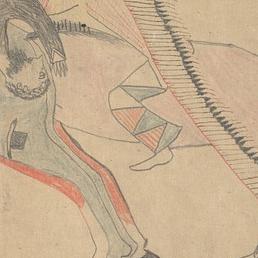
Red Horse pictographic account of the Battle of the Little Bighorn, 1881.

Not long after my live tweeting of Dances With Wolves, a friend of mine from Montreal sent me a link to an interesting exhibition. Red Horse: Drawings from the Battle of Little Big Horn was on display this past January at Stanford University. For the first time in 40 years, many of the Minneconjou Lakota Sioux’s drawings were collected and displayed together. The collection represents an eyewitness account of the battle and its aftermath, captured in pencil and pen in ledger books. (The entire series can be found online at the Smithsonian).

Red Horse’s drawings, commissioned by Army doctor Charles E. McChesney in 1881, methodically recall the events of the battle, with the blood spurting from casualties on both sides, and the Lakota eventually leading away the captured cavalry horses. And absent from each page is Custer. (source)

The importance of this archive–and the importance of having continuous public displays of these drawings–is that it is the telling of Little Big Horn from a Native American who was present. Gone are the romantic ideals of Custer and his men’s “sacrifice” in the land of the savage. The collection not only depicts the chaos of battle, but the horrific aftermath, some pictures featuring the scalped cavalry soldiers and others showing a field of fallen horses, blood flowing from arrow and bullet holes. The lack of an American narrative is apparent, the drawings–simple and stark in form–are a graphic illustration of the realities of battle. “The Red Horse drawings let us see the battle through Lakota eyes. They are the Little Bighorn without Custer,” said Scott D. Sagan, professor of political science at Stanford.

This collection fills in part of the gap in Native American voices in the history the United States. Too often the stories of battle are written by the victors, yet in this case, the victors has been and continue to be so suppressed by an occupying force that their small victories are depicted as acts of savagery and treachery. For centuries the colonization of North America has been visually romanticized in art, movies and television with an agenda that forces the indigenous population into the role of “ungracious hosts.” Red Horse’s depiction of one of the most “storied” battles between the occupied and occupiers are an indispensable addition to our national narrative and worthy of more exhibition and study.


Channel 1354

Earlier in the semester we watched an episode of “Blackstone,” an original Canadian series airing on the Aboriginal Peoples Television Network (APTN). The show held the same tension and drama as most American network series, yet with one glaring difference: the setting was a Canadian reserve, what we call a reservation here in the states. We found it refreshing to be exposed to this narrative and many of us continued to watch the series as it is streaming online. Yet, I found two things troubling: 1) it was difficult for me to watch the show critically out of fear of diminishing its representative importance, and 2) that we found it refreshing at all because the stories of Native Americans are non-existent here at home.

In February, the APTN announced that it was gearing up to launch a similar channel in the United States. An article on the web site Jezebel quotes CEO Jean La Rose saying “We think the time is right for Native Americans to have their own channel.” The idea of Native Americans creating, acting in, and producing their own stories is long overdue. Too often the stories of Native Americans are told by white historians, anthropologists, politicians—when those stories are told at all.

The introduction of a channel devoted the Native American stories has one large obstacle—the reality that it will be relegated to the upper reaches of the cable or satellite channel guide and be relatively undiscoverable to the average viewer. That Native Americans will be interested in a channel that streams their own stories does not appear to be in dispute, but the real challenge will be branching out to a more general audience, giving the American public a chance to have contemporary indigenous people and stories begin to overwrite the “Hollywood Indian” that is so much a part of American culture. I have has the same concerns about other networks devoted to one demographic—allowing people to create an echo chamber of their own thoughts or identity, but not necessarily reaching out to a broader audience.

I hope that the creation of this new channel not only creates huge opportunities for Native Americans to tell their own stories in their own way, but what I really hope is that the providers assign the channel a “remote friendly” number, so that the average viewer, switching between the Kardashians and ESPN will stumble upon something entertaining, engaging and unlike anything they have every seen.


Dear Warriors,

I graduated from Wilson Area High School in Easton, Pennsylvania years ago. More importantly, I am a proud alumnus of the Wilson Area High School Warrior Marching Band. I can remember clearly hearing our named announced over loud speakers at football games and band competitions. There is a special inflection between “Warrior” and “Marching” that emphasized that we were pretty amazing.

And we were/are.

Yet, I would like to ask my fellow alumni, if they think it is time for a change. For all my years at Wilson and many of the years after, “Warrior” was nothing more than a word, a mascot, a combination of syllables that created a brand with which I have been (and still am) proud to identify. But perhaps it is time for a re-branding, time to disconnect the easy association between high school and mascot and re-establish the connection between “warrior” and “history.” If this argument is beginning to sound familiar, you may be a Redskins fan.

I want my Alma Mater to be on the right side of history, to make a statement with its students, faculty, alumni and community that the Wilson Area School District recognize when it is time to evolve its brand and take steps forward.

It is time to open a dialogue about our long time mascot.

This is not some politically correct notions, or a knee-jerk response to outside pressure. I am not making any demands, but I would like to start a discussion about what the “Warrior” has meant to fellow alumni, and what the representation means in the larger, American landscape. Dr. Adrienne Keene has an interesting blog about the appropriation of Native American imagery that should be the first stop for anyone wondering why this type of dialogue is important. It is imperative that the reasoning does not come from myself, or other non-Native people, but from those whose cultural identity is being used as a mascot. Let’s not get distracted by ideas of “honoring” Native Americans as “warriors”, this only perpetuates the image that Native Americans exists only in some magical, past America and not part of our contemporary world.

This is an opportunity to talk, to talk about why this could be a good step forward without forgoing the wonderful legacy of Wilson High. Remember, that legacy is not embodied in the form of a mascot, but in the current and former students that passed through its doors.


Difficulty in Diving In

I admit I have been reluctant to start this blog for my Contemporary Indigenous Rhetoric graduate course. It’s not the fear of expressing my views in a public forum, but that strange notion of whether my thoughts are valid enough for expression in the first place. During our first class, we were asked to write down our preconceived notions, experiences and possible misleading ideas of the contemporary lives of Native Americans. Outside of the incessant pejorative representations in media and commerce, my own experience was severely limited. With a weird intellectual pride, I announced that I was woefully ignorant in all aspects of contemporary Native life.

I65A7G8
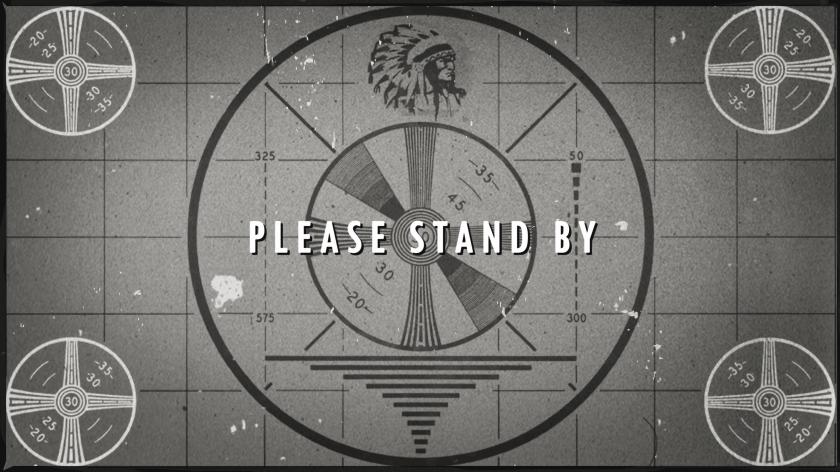
The Indian Head Test Pattern is an interesting piece of Americana. The head was reportedly used to adjust brightness and contrast.

I mentioned tangential experience living near the Tulalip Reservation in Washington State; my connections being more commercial than social. A few “knowing” comments from friendly people while I was looking for work—”you can try the casino, but they tend to only hire tribal”—may have also colored my opinion if I weren’t old enough to take such advice with a heavy dose of salt and a side-eye.

During that class, I briefly touched on my mother’s interest in Native American music and spirituality, one more woman swept up in the New Age “revitalization” and misrepresentation of the “Red Path”, as she calls it. I sound critical of her interest. I am not. Yet there is a certain wish to keep our interests from crossing due to our personalities and my lack of an ability to share. Separate spheres, is what I call it. You have your things, I have mine.

This is probably the main obstacle to fully diving into this topic, at least in the same way I have other classes. I feel like I am treading on someone else’s territory and trying to call it my own. Add to that, the destructive “white guilt” that only comes from a self-awareness of one’s privilege and I found myself a little stuck.

Yet here I am, and while I am doubtful that I can add anything revelatory to the conversation of contemporary indigenous rhetoric, I can curate a space of awareness; a place where I can parse out my own imprinted notions of Native American life, present and past.